Feature
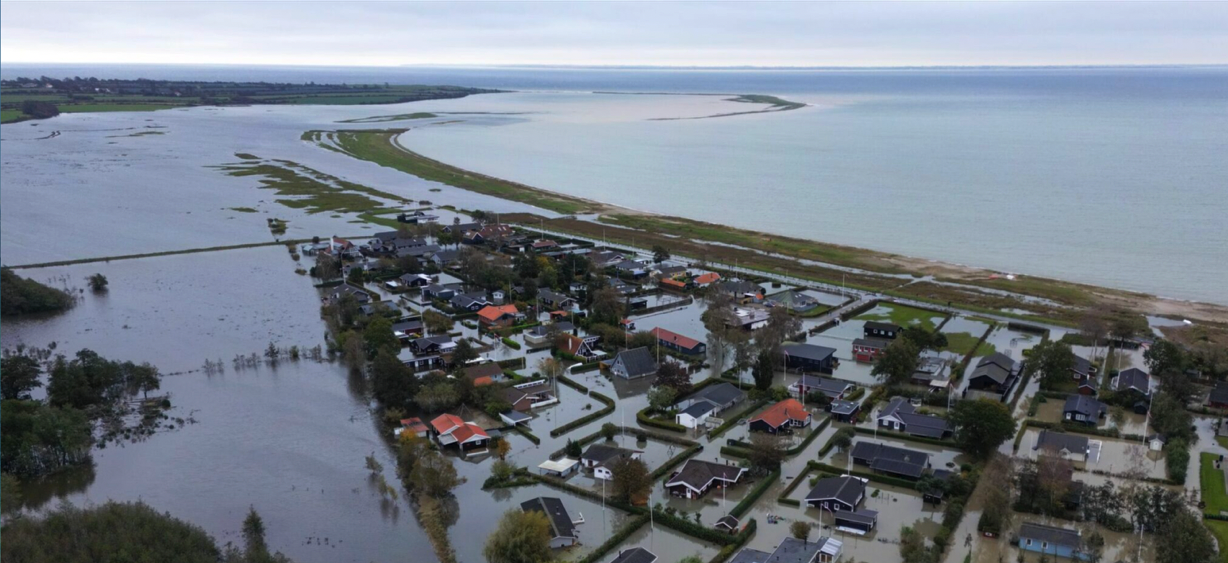
How Europe risks losing the battle against rising flood waters
Europe faces escalating flood disasters driven by warming seas and extreme rainfall, killing communities and hitting the poor hardest, while fragmented policies, uneven data, and weak adaptation leave countries unprepared, an investigation across six countries shows.
The 2024 catastrophic flash floods in Spain claimed some 237 lives and caused extensive property damage across the region, turning into one of the deadliest natural disasters in the country's history.
Spanish scientists predict history will repeat itself not only in Spain but in large parts of central Europe.
The specific mechanism is known in Spain by the widely-used term DANA (Depresión Aislada en Niveles Altos) or Isolated Depression at High Altitudes.
A cold drop is an isolated mass of cold air that produces intense storms and heavy rainfall when it moves over warm regions.
”A situation that’s like a monkey with a bazooka in its hands. We are waiting to see where it’s aiming and where the storms are going to hit,” says physicist and oceanographer Antonio Turiel.
The EU’s Copernicus programme, which provides information from space about the environment, noted an exceptional marine heatwave in the western Mediterranean Sea in June 2025, which led to the highest daily sea surface temperature ever recorded in June for the region: 27.0°C (+3.7°C above average).
As the atmosphere warms, the concentration of water vapour also increases. This amplifies a feedback loop that fuels more intense rainfall events.
Heavy rainfall has also left its mark on central and eastern Europe, where a combination of steep terrain and interventions in the natural flow of water has resulted in sudden and deadly flooding.
In 2024, Storm Boris brought extreme rainfall and flash flooding in Austria, Czech Republic, Poland, Romania, Slovakia and Hungary, killing over a dozen people.
'Unavoidable collapses'
According to the European Environmental Agency, the average global sea level has risen by approximately 21 centimetres since 1900, and with the rate-of-rise accelerating, even more severe coastal flooding is expected.
Yet a recent study by some of Denmark’s leading climate scientists, based on ice core research, describes these projections as highly misleading, as the sea-level rise could be three times worse than expected.
“Even with temperature increases of just two to three degrees, we may face unavoidable collapses of parts of the world’s ice sheets,” says professor Dorthe Dahl-Jensen, an expert in ice, climate and geophysics at the University of Copenhagen.
The fact that floods comprised 43 percent of all disaster events in Europe between 1998 and 2020 does not come as news to those in the affected areas.
All over Europe, there are recurring events caused by too much water in the wrong places.
However, the consequences depend on geography, budget, policy agreements, preparedness and adaptation.
Who can be blamed?
In Ireland, the record-breaking Storm Éowyn in early 2025 served as a reminder of Ireland’s lack of preparedness.
Major cities like Dublin, Cork and Galway were described as “sitting ducks” — dangerously vulnerable to climate-driven disasters but spared so far by little more than luck, experts recognise.
The threat of flooding is also significant in the Netherlands (its name, literally, is the lowlands). Flooding and water damage caused by heavy rainfall, such as in South Limburg, are difficult to predict and to prevent.
'Residents of my municipality take pills to sleep and pills to get through the day. The disaster after the disaster is the worst'
Daan Prevoo, mayor of Valkenburg in South Limburg, believes that four years after floods in the region, his municipality is still not well prepared for a similar disaster. In fact, many victims from that time are still struggling with the physical and mental consequences.
“Residents of my municipality take pills to sleep and pills to get through the day. The disaster after the disaster is the worst,” he says.
But national-level responsibility is murky, making it difficult to determine who is accountable for what.
In Poland, mountain streams are governed by one institution, Wody Polskie (Polish Water Management Authority), while trees growing on riverbanks fall under another, Lasy Państwowe (State Forests), a governmental organisation covering about 78 percent of Polish forests.
“The State Forests is very passive when it comes to water and flood issues. Hundreds of forest roads, wide enough for tree-harvesting machines, have been built in the last years. In a flash flood, they transform into full-scale rivers in a matter of hours," says Janusz Zaleski, professor of technical science at Wrocław University of Science and Technology.
Adam Ulbrych, a specialist in nature retention, argues that renovating old irrigation systems upstream by using little more than wooden planks to divert water can retain as much water as a big concrete reservoir downstream — and at roughly one-tenth the cost.
Urban planning
In October 2023, Brechin, an eastern Scottish town, was hit by a wall of water that changed it forever. The resulting flooding damaged some 189 homes, including houses, flats and caravans, and more than 1,000 residents were evacuated.
“We don’t know if it is an area that anybody will ever want to live in again,” Jill Scott, a local councillor, says.
Although no longer a member of the EU, the UK is still regulated by the two major planks of EU legislation – the Floods Directive and the Water Framework Directive.
In the UK, in particular, the concept of flood poverty has also emerged, focusing attention on how factors such as socio-economic deprivation can increase both the likelihood of flooding and complicate recovery from an event.
The Labour government wasted no time in honouring a manifesto commitment to form a UK-wide Floods Resilience Taskforce. But the government also has a commitment to build 1.5 million homes in the next few years, despite experts warning that a significant number will be built on floodplains.
Similarly, in Spain, a similar gap exists between what is done and what is needed, though circumstances differ. Urban planning, or the lack of it, has worsened flood risks.
'Planners are turning people’s homes into death traps: residents will not be able to escape because the street-facing sides are barred with metal grilles'
Large areas of flood-prone land were reclassified and built on during the 1997–2007 housing boom, often ignoring official planning and environmental safeguards, argues Fulgencio Cánovas, a geographer specialising in flood research at the University of Almería.
“The planners are turning people’s homes into death traps: residents will not be able to escape because the street-facing sides are barred with metal grilles,” he says.
This reflects a conflict between urban and rural areas.
In Spain, difficulties for traditional farming in upper river basins have worsened downstream flooding. Critics blame what they call ecologist amateurs misinterpreting the UN global agenda, preventing farmers from clearing streams and riverbanks. In Poland, logging in the mountains has similarly worsened flooding downstream.
Overall, coordination between local and central authorities is often poor, delaying critical responses, as seen in Spain and the Netherlands.
No EU common understanding
Meanwhile, Europe’s strategy to prevent and adapt to flooding remains largely aspirational, with no specific funding included in the proposed next long-term EU budget.
And the European Parliament has little influence since this is not a legislative proposal.
Copernicus, the EU’s earth observation programme, also struggles with data. The agency gets data from EU member countries. But the risk levels are not clearly defined or harmonised, creating systemic challenges.
“What is high risk and what is low [risk] is decided by each member state. From a pure scientific angle, we would like to have a clear harmonised definition for all. But there are different local factors to consider. Flood risk in Finland is another matter than in densely populated Belgium and the Netherlands,” according to sources, who asked not to be quoted directly.
Another challenge is the importance of very local data.
Kirsten Halsnæs, professor of climate and economics at the Technical University of Denmark, is one of the scientists who have participated in the UN’s Intergovernmental Panel on Climate Change. She is sceptical about the value of relying on centralised data.
“Data models should to a greater degree reflect the knowledge and priorities that exist locally, rather than what you can derive from a general model,” she says.
This puts focus on the EU’s role as a coordinator, legislator and possible provider of the necessary means.
But climate scientist Kirsten Halsnæs does not see the EU as a major player: “I certainly do not expect the EU to allocate money for climate adaptation. In that case, it is not necessary for investments to be comparable across member states,” she says.
Jessica Rowall, EU commissioner for environment and water resilience, is responsible for the bloc's water strategy, yet five other commissioners oversee related issues.
When asked how prevention and adaptation costs will be covered, the commission points to cohesion support, agricultural subsidies, and the Horizon science programme.
Environmental organisations, the European Parliament, and climate expert Kirsten Halsnæs fear flood damage will remain uncovered by the EU budget.
The commission’s responses — and lack of denials —suggest these fears are well-founded.
Team members, their national publications and upcoming reporting from the investigation can be found here. The production was supported by a grant from the Investigative Journalism for Europe (IJ4EU) fund.
Author Bio
Staffan Dahllöf is a freelance EU reporter specialising in freedom of information. Katharine Quarmby is a freelance investigative journalist and editor. Nicoline Noe is a freelance investigative data journalist with Investigative Reporting Denmark. Marcos García Rey is an investigative reporter with El Confidencial and ICIJ. Clarine van Karnebeek is a freelance reporter in the Netherlands. Krzysztof Story is a journalist with Tygodnik Powszechny and investigative reporter for FRONTSTORY.PL. Tommy Greene is a freelance journalist published in outlets including the Guardian and the Independent.