Investigation
Europe’s landfill crisis exposed: new map reveals toxic cocktail of environmental risks
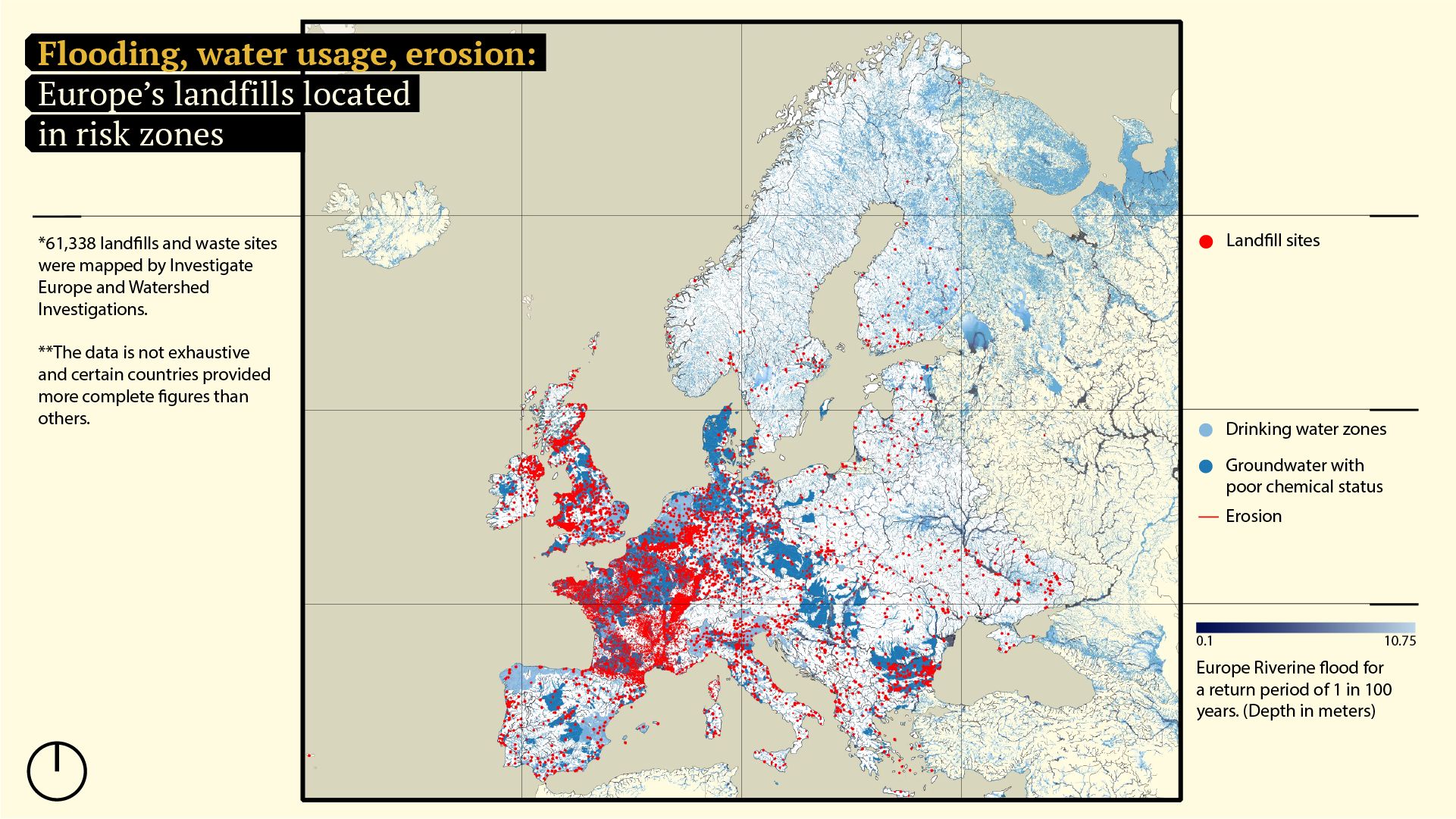
Thousands of landfills across Europe lie in flood-risk zones, areas which could endanger drinking water or sensitive conservation sites, Investigate Europe and Watershed Investigations can reveal in the largest landfill mapping exercise ever undertaken across the continent.
These sites risk leaching toxic chemicals into waterways, bringing a potential cocktail of harms to humans and surrounding ecosystems.
There are estimated to be up to 500,000 landfills scattered across the EU plus the UK, with roughly 90 percent established before pollution control regulations.
Their exact locations, however, remain broadly unknown, largely due to a lack of consistent data and the fact that many sites have been covered over.
Analysis of data obtained from Freedom of Information requests, government agencies and public sources pinpointed the locations of more than 60,000 sites.
Many are likely to be historic, pre-dating the European Union’s 1999 Landfills Directive, meaning that they could lack modern-day containment measures, such as the use of protective lining to prevent leakages of harmful waste.
“Europe is obviously ignoring its landfill crisis,” Jutta Paulus, a Green German MEP, said in response to the findings. “The hundreds of thousands of legacy sites, many in flood or erosion-prone zones, remain a dangerous blindspot.”
Among those mapped, almost 30 percent were found to be in areas with a significant risk of flooding, raising the possibility of toxic waste entering water systems and surrounding land.
More than 3,000 sites exist in protected conservation areas, leaving ecosystems and natural habitats at risk of pollution. Thousands more were found where groundwater has a poor chemical status, something that landfills have possibly exacerbated.
Almost 10,000 were identified in drinking-water zones across France, the UK, Spain, the Netherlands, Germany and Italy.
'Europe is obviously ignoring its landfill crisis' - Jutta Paulus, Green German MEP
Those most visibly at risk are situated along the coast.
The analysis found 346 landfills in coastal erosion zones in England, Wales and France, while more than 250 sites elsewhere across Europe are within 200 metres of the coast, potentially at risk of erosion or exposure from storm surges.
“With increasing frequency and magnitudes of floods and erosion from climate change, there’s a greater risk of these wastes washing into our environment,” said Patrick Byrne of Liverpool John Moores University, adding that harmful materials disseminating from the landfills bring other threats, including potential negative health impact.
Cocktail of nasties
The European Environment Agency lists a cocktail of nasties that could be escaping through the leachate — liquid that drains or 'leaches' — from these sites: “heavy metals and ammonia nitrogen compounds, as well as emerging pollutants such as pharmaceuticals, plasticisers” and PFAs or so-called ‘forever chemicals’.
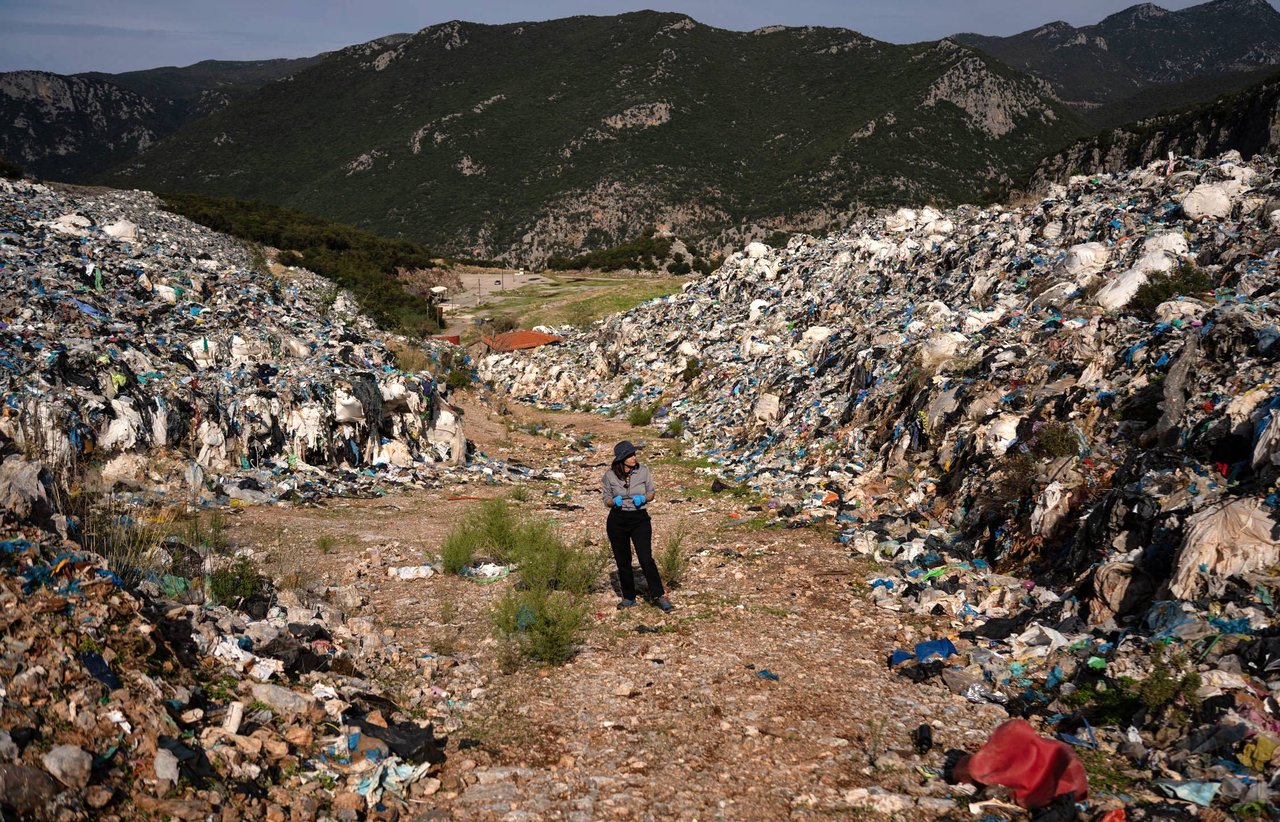
In Greece, reporters commissioned laboratory tests of runoff coming from a former landfill in the southern Peloponnese.
The Maratholaka landfill, which closed in 2022 after years of campaigning by local activists, is situated in the picturesque Taygetos Mountains, which are visited by thousands of hikers every year.
Yet tonnes of waste remain visible around the site and test results found levels of PFAs seventy-six times the drinking water standards, as well as mercury and cadmium leaching from the site.
“There is currently no evidence or data to substantiate any environmental impact from the operation of the site,” the mayor of Kalamata, Athanasios Vassilopoulos, told Investigate Europe.
After mapping the sites, Investigate Europe and Watershed Investigations conducted modelling to show the likely extent of environmental risks.
When scaling up the analysis to cater for the estimated half a million landfills across Europe, the dangers appear even more acute, with 30,000 located in protected conservation sites, 140,000 at risk of flooding, and nearly 300,000 where the groundwater is polluted.
Modern landfills which are well managed will likely be low risk.
The EU Landfills Directive ushered in a wave of closures for old sites, as well as renovations for active ones, but it did not impose comprehensive mapping duties on EU states, nor a general obligation to ensure all closed sites were made safe.
The EU Commission has opened 42 infringement proceedings against member states relating to on-the-ground breaches of the Landfills Directive since 1999, involving both legal and illegal dump sites, Investigate Europe’s analysis found. Nearly half of those are currently open, according to the official database.
Millions in penalties
Cyprus, Spain, Slovenia and Slovakia are among those to have been brought before the European Court of Justice, some on multiple occasions. Italy, one of the worst-performing member states, has paid hundreds of millions in penalties relating to its track record on waste management.
In one case alone, it has paid €326m, according to figures published this April by the European Commission.
In some instances, EU enforcement efforts have failed to comprehensively resolve problems. Investigate Europe reviewed many closed infringement cases and found several sites still seemed to present issues years later.
Rome and Corfu
One is the sprawling Malagrotta on the outskirts of Rome, once considered the biggest dump in Europe, which has been contaminating its environs for decades.
Malagrotta closed in 2013, and the commission ended its official case three years later, keeping it under observation.
But work to neutralise the site’s environmental impact only started this year. A 2024 report noted that leachate was contaminating the soil and groundwater around the site.
Another case is Temploni in Corfu, which is no longer subject to an official infringement case, but where excess trash is still piled up. This summer, it caught fire, billowing smoke onto the Greek island.
A review of the Landfills Directive is scheduled for next year, but no requirements for states to map all landfills or deal with safety issues from historic sites are anticipated to be part of any changes, a source close to the process told Investigate Europe.
“The lack of consistent, centralised data makes it nearly impossible to get a full picture, which is exactly why the findings of this investigation are so important,” MEP Paulus said.
“Without stronger monitoring and a thorough integration of landfill risks into waste and climate policies, Europe risks serious impacts on its water, soil and air.”
The European Commission failed to respond to multiple requests for comment about the number of and risks posed by landfills across Europe by the time of publication.
Additional reporting: Eurydice Bersi, Lorenzo Buzzoni, Pascal Hansens, Ella Joyner, Leïla Miñano, Conor O’Carroll and Rachel Salvidge.
This story is the first release from Toxic Ground, an investigation led and coordinated by Investigate Europe and Watershed Investigations. It is being published with media partners around Europe including Arte, Altreconomia, EUobserver, the Guardian, InfoLibre, ITV News, the Journal, Reporterre, Reporters United and Visão.
The project is supported by Journalismfund.eu
Author Bio
Juliet Ferguson is a reporter with Investigate Europe. Leana Hosea is an investigative journalist and co-founder of Watershed Investigations.
Related articles
Tags
Author Bio
Juliet Ferguson is a reporter with Investigate Europe. Leana Hosea is an investigative journalist and co-founder of Watershed Investigations.